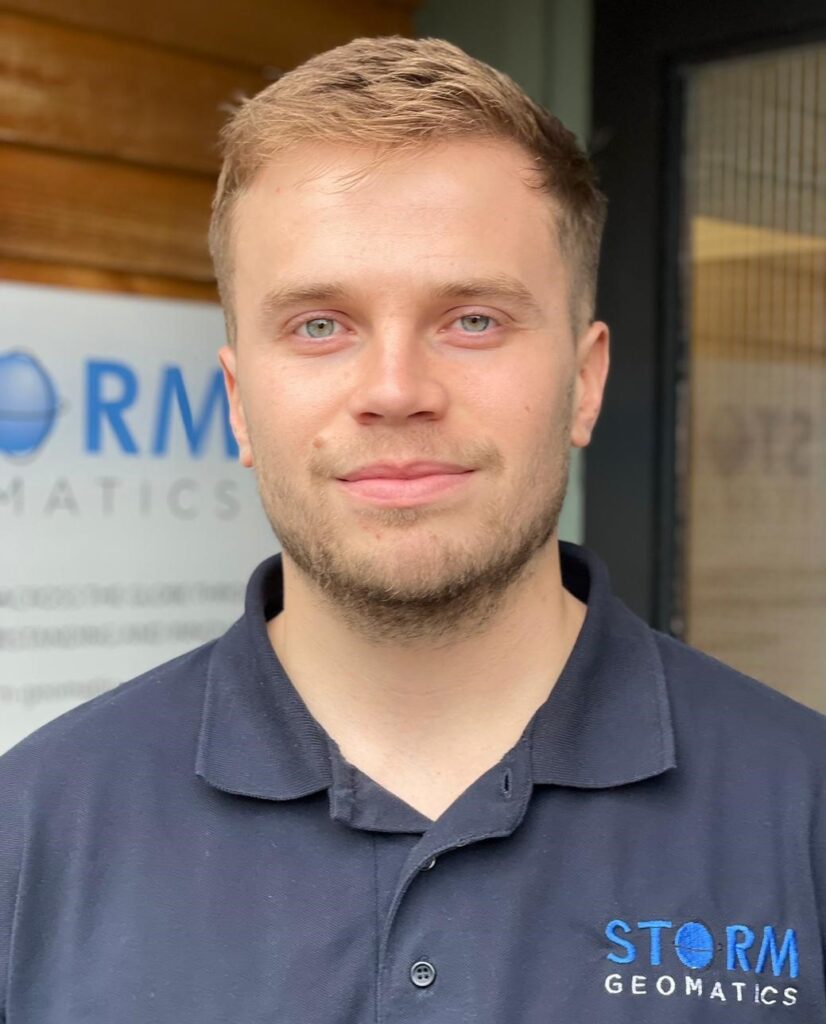
Director, MK Surveys
Lewis Hook BSc (Hons) MCInstCES MRICS,


Started with: Degree in Automotive Engineering
Working as: Hydrographic Surveyor, Storm Geomatics
I did an automotive engineering degree at uni. After graduating, I had a few different jobs to earn some money – some delivery and warehouse jobs whilst applying for graduate engineering roles. I stumbled across the job advert for Storm Geomatics on an online careers search engine. I grew up on a farm, so I’m used to being outside. So the appeal of that and the half and half working – outside and office work – really appealed to me.
At uni, I did a lot of CAD work and problem solving, so that meant I was able to pick up the CAD tasks in this job quite quickly and learned to enjoy overcoming the job’s challenges.
While working I have gone through my membership application for CICES – that’s the Chartered Institution of Civil Engineering Surveyors – and I’m now a Technical Member. This demonstrates where I’m at in my professional development. I’ve done nearly four years in this job, and I’ve still got so much to learn.
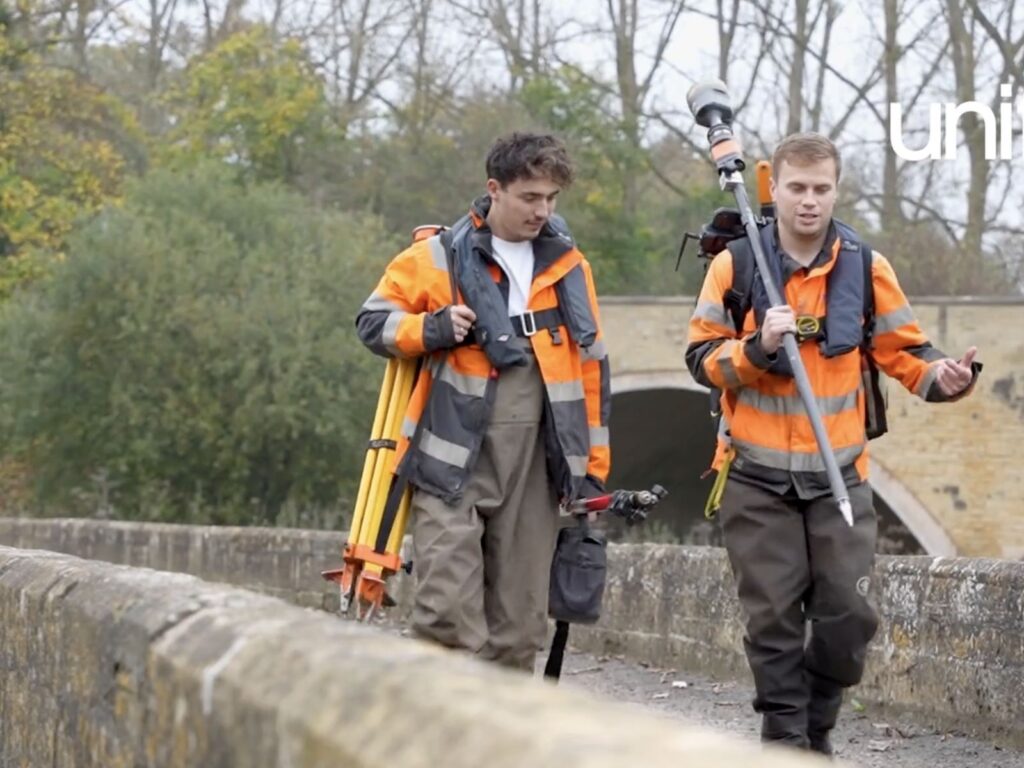
My work is usually related to flood modelling – measuring rivers and determining how well they can carry water without flooding, and where the water is likely to go in flood events.
A lot of the work is on foot but we also use drones and boats to help with the surveying.
Back in the office I’ll put together a survey report where I’ll comment on anything unusual we’ve come across and use specialist river processing software to create deliverables such as data files and CAD drawings which flood modellers can use to calculate how rivers will react to specific rainfall events.
The travel and variety – I’ve been to places I never would have normally gone to. I also I find the organising and planning side of the job really satisfying as well. We need permission to work, say, in someone’s garden or a farmer’s field. So they might give you certain dates to try and fit that work into. Logistically, it’s a puzzle you have to solve to try to get the most possible work out of every day.
The cold winter mornings when you have to go out and just wrap up warm and get on with it.
The first bit of advice I’d give would be to research this profession to find out what jobs are like day to day. Surveying as a college course or degree would be really helpful, but for a lot of companies, you can start at entry level and train while you work.
A good way to know if surveying might be for you is to try a hobby that’s outdoors, even if that’s just going for walks in nature. It might help you feel less doubtful about being in all the different weather conditions if you’ve already experienced it, and you know it doesn’t bother you.
One thing you need is good attention to detail – it helps to pick up on the little details and make sure your work is accurate – this is really important when producing the models.