Director, MK Surveys
Lewis Hook BSc (Hons) MCInstCES MRICS,


Started with: QCF Level 3 qualification in utility mapping and surveying
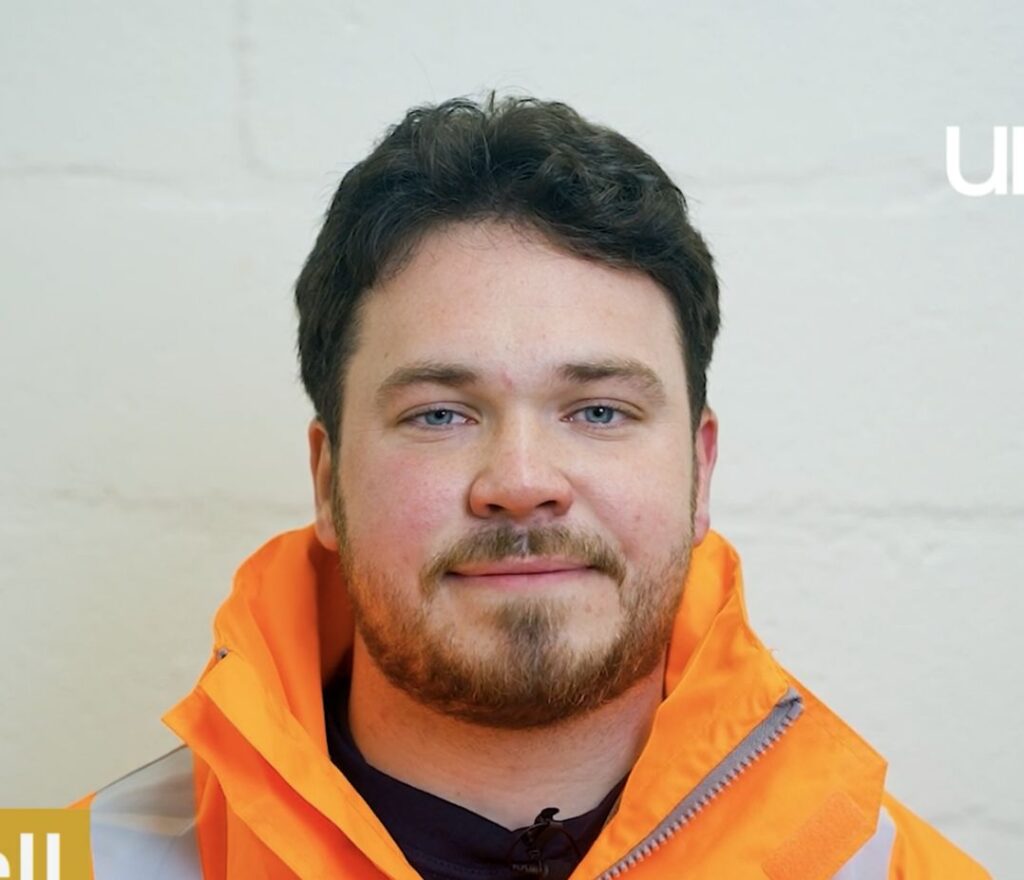
Working as: Utilities Surveyor, Catify
I got into surveying through word of mouth. I would never have known surveying was a thing before I started here, and I also didn’t know how much of a pivotal behind the scenes role surveyors play on massive construction sites across the country.
I started in 2022 and trained on site for a couple of years with experienced surveyors at Catify. You are only as good as your colleagues on site. After gaining the required experience I went on to take a Level 3 Certificate in utility mapping and surveying. This was training alongside working in my role. My next step will be to take part in the Level 5 qualification.
A utility is something like an electricity or gas supply. So as a utilities surveyor, I use lots of different methods and tools to locate underground utilities to prevent strikes. A strike is when someone’s digging, and they hit a utility – so that could be a pipe, for example.
There are around 60,000 strikes each year and that costs the economy 2.5 billion pounds, so it’s important that we try and prevent them!
I work in shifts, so I can work both days and nights. On a typical day, I start by meeting a client on-site, discussing what’s been agreed with the project manager and doing a site walk. I’ll then check my method statements, which are detailed documents that cover health and safety. They’re like road maps that guide you through the job, pointing out any hazards.
Next, I check my desktop utility record searches, which show where the utilities are underground, and check any drawings to get an idea of what’s on-site. I’m trying to prove the drawings I’m given are accurate, and looking for any ‘unknowns’ that might be missing from them.
One of the ways we do this is through GPR, or ground penetrating radar. It’s a locating method that sends radio waves through the ground. We want to find utilities like the gas main, but we need to watch out for things like rocks that might get in the way. From that, we get lots of images, and try to match it up to the drawings. Then the client takes our drawings, and digs down to find the fault.
I’m always out and about in my job – there’s no desk work. If we need to look at emails or drawings, we just use our phones.
You get to travel a lot with this job. I’ve been in the valleys, and up to Glasgow; places I wouldn’t have been able to go to otherwise. I’ve seen some really impressive sites – I got to work on HS2, the high speed railway; and Heathrow Airport, working on the runway with planes coming by. It’s stuff you probably wouldn’t see unless you were in this line of work.
You can come into surveying as a trainee. I got this job with no surveying experience. So look out for trainee jobs and apprenticeships. Then, you can do a surveying course once you’re in the job.
When you start, the best thing you can do is ask lots and lots of questions. My colleagues have always loved it when I ask questions – the last thing they want is someone who’s not interested! You have to really learn as you go in this job, and put the work in. If you do that, you’ll find it really rewarding.