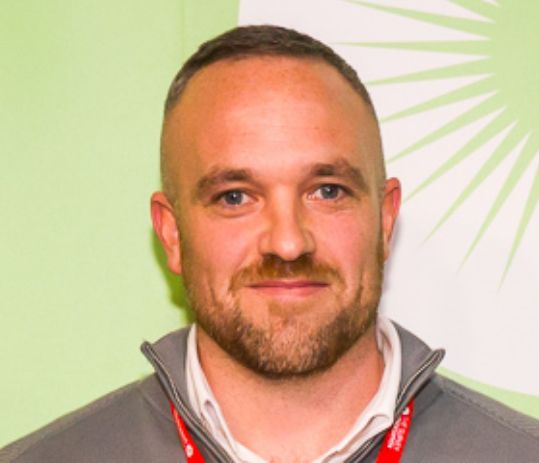
Director, MK Surveys
Lewis Hook BSc (Hons) MCInstCES MRICS,


Started with: Level 6 Geospatial Mapping and Science Specialist Degree Apprenticeship
Working as: Geomatics Surveyor, Hampshire County Council
My interest in surveying started when I was on placement 15 years ago. I started a civil engineering apprenticeship, and I was fortunate enough to move round different departments to gain a broad knowledge, this was where I had my first experience of surveying.
At college I studied A-Level Art, Graphics & Geography. I actually failed Geography, so it’s ironic my career has led me towards a geography related job. Although I failed Geography at college, I do feel it provided me with a good foundational element to understand topography and earths physical features.
I then undertook a part-time Civil Engineering HNC whilst I worked as an assistant surveyor. This was enjoyable and I got to learn about and appreciate different skills across the whole construction industry.
Lastly, I studied at the University of East London (UEL), where I undertook a day release apprenticeship in Geospatial & Mapping Science. I was fortunate that my HNC and experience within the industry meant I did not need to complete a foundation year. I thoroughly enjoyed my time at UEL, I felt that although I had several years of surveying experience it provided me with theoretical context that helped me understand the reasoning and principles behind my fieldwork.
I began my career in surveying by developing a solid foundation of hands-on site experience, supporting senior surveyors with data collection and trying to learn geospatial techniques and methods from them. Over time I progressed into a more senior and managerial role, now leading survey teams on major public infrastructure and environmental projects. The combination of hands-on experience and academic study has helped me progress to where I currently am.
I have always loved being outdoors, I knew I wanted to pursue surveying whilst I was on placement in the survey team and getting hands on with new and advanced technology in diverse environments from countrysides, city centres or coastal areas.
In the future I see myself moving towards a teaching or mentoring role, where I can share my knowledge and experience with the next generation of surveyors. I’m passionate about helping others understand the technical and practical side of surveying.
I value that my work plays a pivotal role in the real-world impact. Roads, buildings, bridges, property boundaries all depend on accurate surveying. There is real satisfaction in seeing your measurements turn into lasting infrastructure.
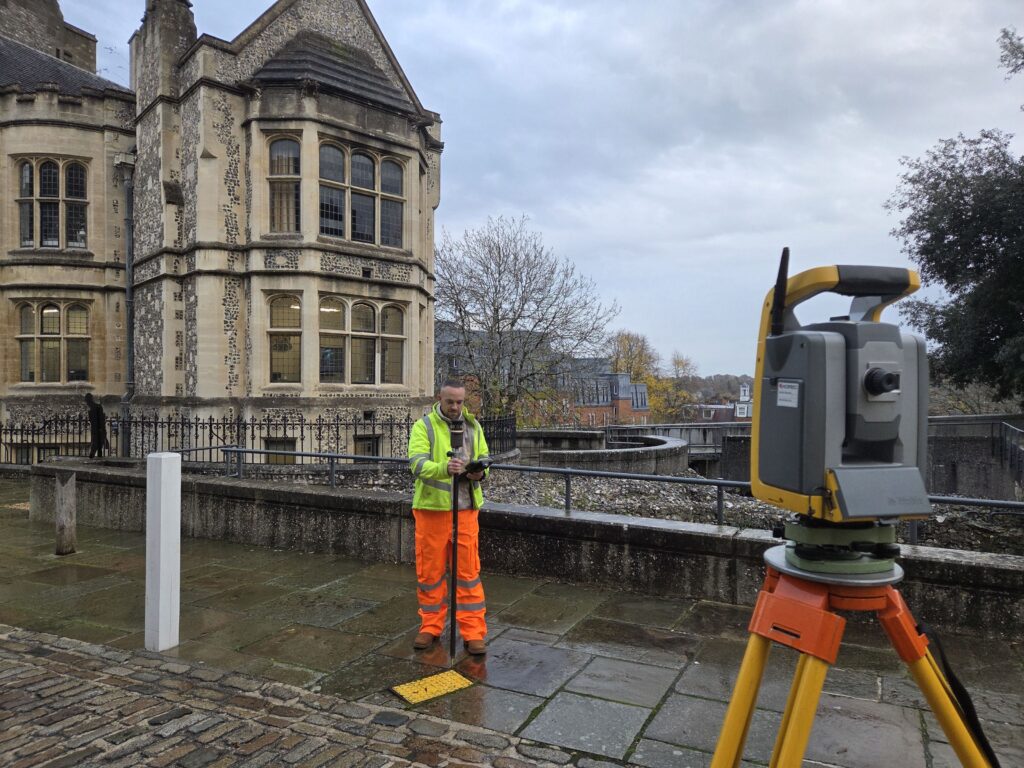
My typical week is highly variable depending on the project, this could involve anything from carrying out a topographical survey, measured building survey, monitoring structural movement or underground utility surveys. A typical week often combines fieldwork and office work, starting with planning and preparation before heading to a site to collect the data. This would involve using a variety of specialist equipment from total stations, digital levels, GPS or terrestrial laser scanners. Once all the fieldwork is complete, I can begin to process the data collected on site to produce detailed drawings for clients.
I play an active role with my employer’s Civil Engineering Apprentices support programme in which I regularly put on survey workshops to help those who would either like to gain more knowledge and experience of the subject or just need additional support in their survey modules for their course. I also actively encourage them to join us on site and shadow our team for a day to see what a surveyor involves.
I am also a member of the Chartered Institution of Civil Engineering Surveyors and sit on the South East region committee, which allows me to help and contribute to organising events or talks.
Take advantage of any training offered to you by your employer to further you own knowledge and skills and to keep learning and growing as an individual. Master the basics as they will become your foundations and lastly embrace new technology early.
One of the most memorable tasks to be involved with was locating and surveying an abandoned canal tunnel in West Sussex. The canal tunnel spanned for over 350m long and went under a busy road, which was the main cause of concern. We had to establish how deep the structure was below the carriageway. The scheme involved significant complexity and required extensive problem solving to address both the technical challenges and the careful management of survey related risks to ensure accuracy and safety.
My proudest career achievement was earning a First-Class Honours for my degree. I never considered myself particularly academic so achieving a strong result whilst also trying to raise a young family alongside it was especially meaningful. It felt like genuine validation of the skills and dedication I’ve built through my work. Balancing study, family and professional growth made this accomplishment even more rewarding and fulfilling.